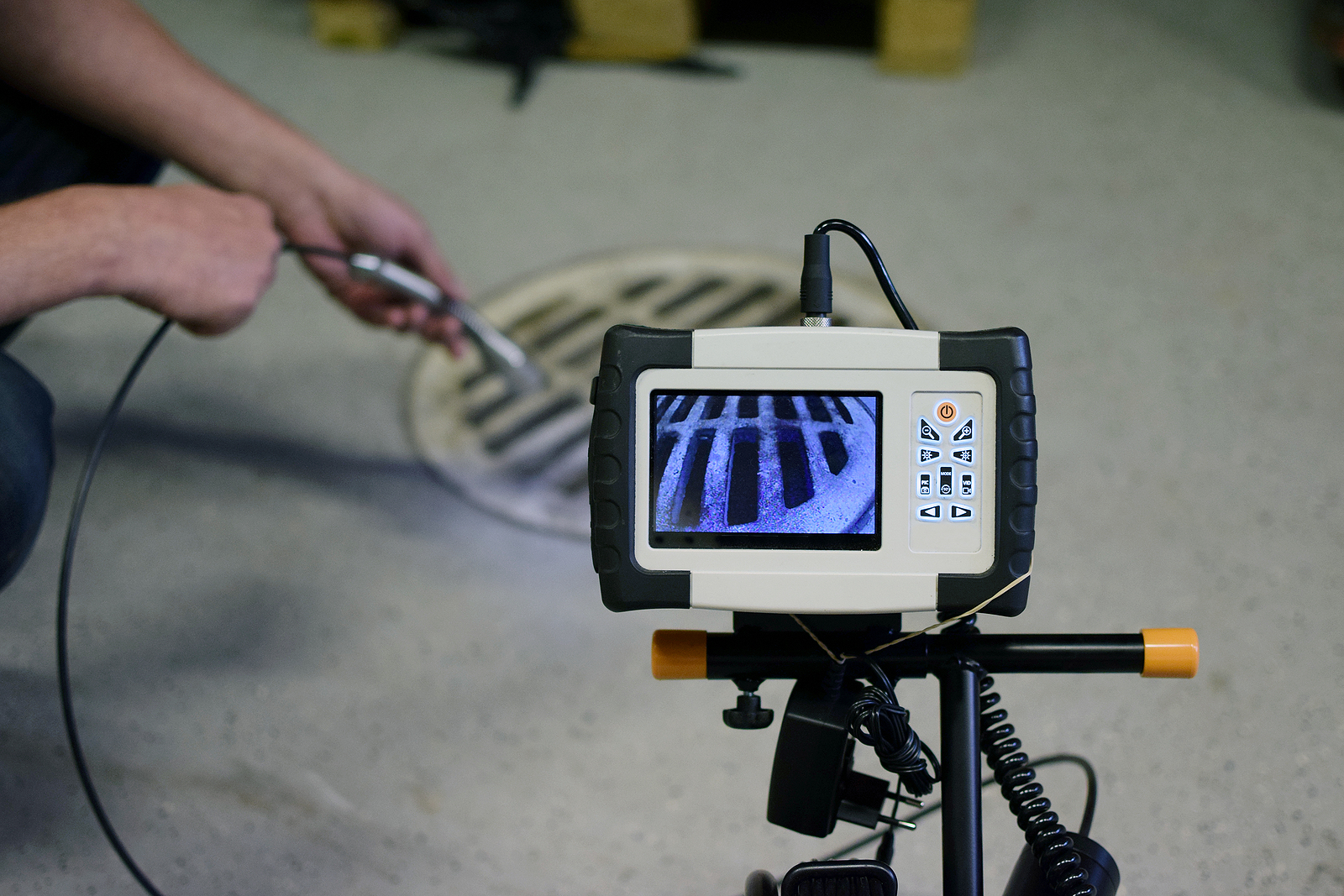

A sewer scope takes the guesswork out of drain problems. A small camera goes into the line through a cleanout and sends a clear video to a screen. You watch the inside of the pipe in real time. You see the build-up, the joints, and the exact spots that slow or block flow. That view tells a complete story about how well your sewer line moves waste and how long it can keep doing that. Four things drive most decisions after a scope: slope, bellies, offsets, and intrusions like roots or debris. Let’s break those down in plain language and show how each one affects your home in Durham, NC.
Slope: The Quiet Force That Keeps Waste Moving
Sewer lines work by gravity. The line needs a steady, gentle downward tilt from the house to the city main or septic. Too flat and waste crawls along and leaves solids behind. Too steep and water outruns the solids, which also leaves debris behind. The camera lets us measure slope over distance and spot any change in pitch.
During a scope, we watch how the water behaves. A smooth sheet of water that hugs the bottom of the pipe shows a healthy pitch. Pooling or slow sheets show a flat run. Rushing, thin sheets in short bursts can hint at a sharp drop. We also read the distance counter on the camera to map where each change happens. With that data, we build a plan that restores a steady, healthy slope.
Why it matters in Durham: the Triangle’s mix of older homes and newer infill creates a patchwork of materials and depths. Yard grading and past repairs can leave short sections with poor pitch. Correct slope protects your foundation and your interior because it reduces backups and slow, smelly drains.
Bellies: Low Spots That Trap Water And Solids
A “belly” is a dip in the pipe where water sits even after fixtures stop running. You rarely see a belly from the surface, but you feel the effects. Odors, repeat clogs, and gurgling often trace back to one of these low spots. The camera shows a belly as a pool that never drains away. You see the lens drop below the water line, the view turns hazy, and the distance counter keeps moving while the camera swims.
Small bellies can form from soil settlement, shallow trenching, or poor backfill. Larger bellies often come from past digs or tree roots that disturbed the bedding. In clay-heavy soils around Durham, a heavy rain can compact poorly supported trenches and deepen a dip. Leaving a belly in place invites grease and paper to collect, grow, and harden. That creates a cycle of clogs that returns faster each time.
Fix options range from targeted excavation and proper bedding to trenchless methods where conditions fit. The goal stays simple: remove the dip and bring back a steady path for water and solids.
Offsets: Misaligned Joints That Snag Debris
An offset is a joint where two pipe ends no longer line up. Think of a tiny step inside the pipe. Waste hits the step and starts to shred and snag. A small offset high on the pipe wall causes less trouble. A step on the bottom or a full ledge across the flow path causes frequent clogs.
On camera, offsets show up as a sudden edge or a lip at a joint. The image may tilt or bump as the camera climbs the step. We note the distance, pipe material, and the direction of the step. That detail helps us plan a repair that lasts. Offsets often come from soil movement, heavy vehicle loads over shallow lines, or roots that push into joints on older clay sections.
Some offsets only need a spot repair or a trenchless liner. Severe steps, broken bells on clay, or crushed sections need a short dig and a solid base. The fix stops the snag point and restores a smooth path for flow.
Intrusions: Roots, Scale, And Debris That Narrow The Path
Roots love sewer lines. They hunt for tiny leaks at joints and push in for moisture. Once roots reach the flow, they act like a net and catch paper and wipes. Scale and mineral build-up also narrow cast iron lines and rough up the surface. Food grease coats the walls of kitchen lines and creates a sticky film that catches more debris.
A sewer scope makes each problem easy to spot. Roots show as white, hair-like strands or thick bundles. Scale looks like a rough, crusty wall with flakes. Grease shows as a dull, brown film. The video tells us how tough the material is, how far it runs, and what method clears it best. We may cut roots and jet the wall clean, then talk through a long-term plan that could include root treatment, joint repair, or a liner.
What A Complete Report Should Include
A good sewer scope ends with a clear, simple report. You should receive:
- A video file or link with the full run, not just clips
- A map with footage markers to each issue
- Notes on pipe material, size, and cleanout locations
- Clear descriptions of slope changes, bellies, offsets, and intrusions
- Repair or maintenance options with pros and cons for each
That report gives you leverage during a home sale, helps you plan a remodel, and prevents rushed choices after a backup.
How Issues Show Up Around The House
You can spot early signs without a camera:
- Toilets that burp or gurgle after a shower runs
- Multiple slow drains on the same floor
- Sewer odor near a floor drain or low sink
- Backups after big gatherings or heavy rain
- A patch of grass that grows faster over the line
These signs do not prove a single cause, but they often point to slope issues, a belly, or a snag at an offset. A scope confirms the cause and its exact location.
Repairs That Match The Problem
No single fix fits every line. We match the method to the cause and the condition of the pipe.
- Cleaning: Hydro jetting restores a smoother wall and full diameter after grease or light roots.
- Spot repair: A short dig replaces a broken section, corrects bedding, and sets proper pitch.
- Trenchless lining: A liner bridges offsets and small cracks and seals joints. The line must suit a liner, so we rely on the scope to confirm that.
- Full replacement: Bad bellies, shattered clay, or long, flat runs may need a new line with proper depth and slope.
We talk through choices in plain language. You get the facts, the pros and cons, and the steps that protect your home and budget.
The Best Time To Schedule A Sewer Scope
- Before you buy or sell: Avoid surprises, set fair expectations, and plan repairs with real data.
- Before a remodel or addition: New fixtures add flow. Make sure the main line can handle the change.
- After repeat clogs: Stop the cycle with a view inside the line.
- Before trenchless work: A scope confirms fit for lining and guides prep.
A one-hour visit can save days of stress and thousands in damage later.
Why A Local Team Makes A Difference
Durham soils range from clay to fill. Neighborhoods blend older clay and cast iron laterals with newer PVC. Tree roots thrive in our climate. A local crew reads those patterns fast. We know where lines often settle, which joints on older clay fail first, and how recent infill work affects slope and depth. That local knowledge turns a simple camera run into a smart plan that lasts.
FAQs: Sewer Scopes, Slope, Bellies, and Offsets in Durham, NC
1) Do I need a sewer scope before buying a home in Durham?
Yes. A scope gives you proof of slope, bellies, offsets, and root intrusion. You enter the sale with facts and a clear plan.
2) What slope counts as healthy for most residential lines?
Most homes do well with a steady, gentle pitch. The camera confirms that the flow moves as it should and that no flat runs slow waste.
3) Can hydro jetting fix a belly or an offset?
Jetting clears debris and roots. It cannot lift a sag or align a step. A belly or severe offset needs repair or replacement.
4) How often should I rescope a line after repairs?
Plan a scope after the repair to set a baseline. Rescope if symptoms return or before major projects that add new fixtures.
5) Do tree roots always mean I need a new sewer line?
No. Light growth often clears and stays clear with maintenance and sealed joints. Heavy growth or broken joints may need lining or a short dig
Need a clear view of your sewer line in Durham, NC? Call Acme Plumbing Co. at (919) 877-6268 for a same-day sewer scope and expert fixes.